

The Twenty-fifth Amendment to the United States Constitution is once again dominating headlines, sparking debate across political circles, media outlets, and social platforms. Originally ratified in 1967, the amendment was designed to clarify presidential succession and address situations where a president becomes unable to perform their duties. Today, it is trending due to renewed political tensions, health concerns, and speculation surrounding leadership stability in Washington.
What Is the 25th Amendment?
The 25th Amendment outlines clear procedures for replacing or temporarily relieving a U.S. president who is unable to carry out their responsibilities. It consists of four sections:
- Section 1: Establishes that the vice president becomes president if the sitting president dies, resigns, or is removed.
- Section 2: Provides a process for filling a vacancy in the vice presidency.
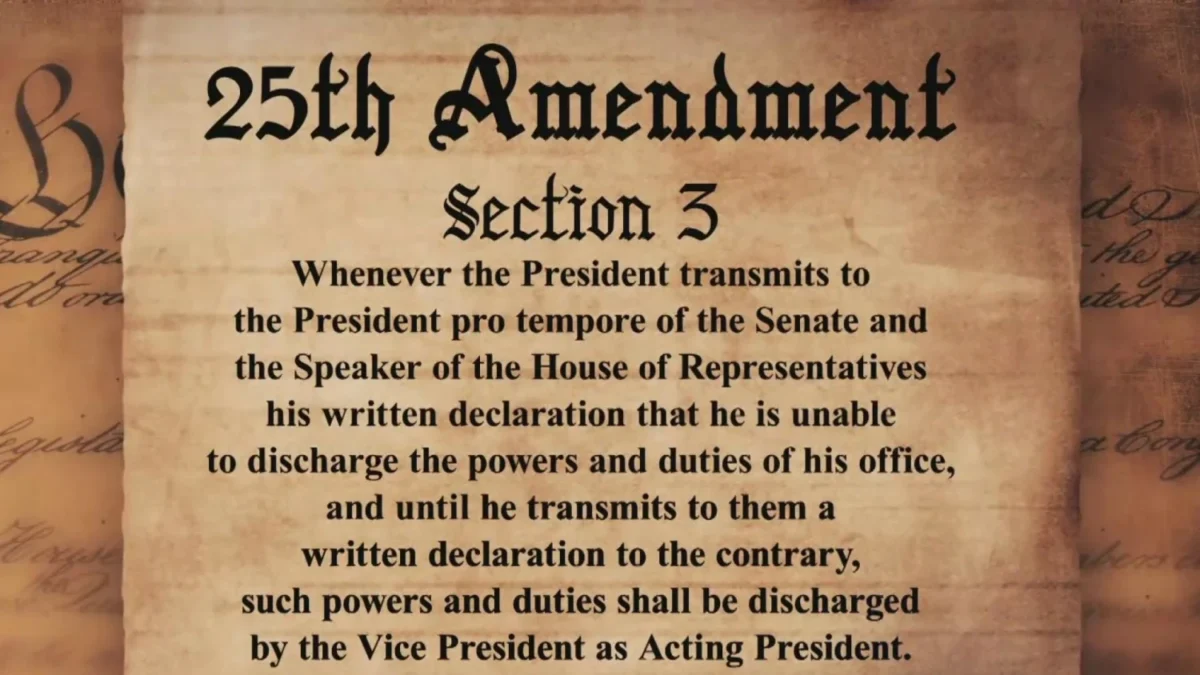
- Section 3: Allows the president to voluntarily transfer power to the vice president temporarily.
- Section 4: The most controversial section, enabling the vice president and a majority of the cabinet to declare the president unfit for office.
This constitutional mechanism has been used several times in U.S. history, though Section 4 has never been fully invoked.

Why Is It Trending Now?
The 25th Amendment has surged in search trends due to ongoing discussions about leadership capacity and political stability in the United States. Concerns over age, health, and cognitive fitness of top leaders have reignited debates about whether constitutional safeguards like the amendment should be used more proactively.
Political analysts and commentators have referenced both Joe Biden and Donald Trump in recent discussions, reflecting how the amendment has become a recurring topic regardless of party lines.
Additionally, viral clips, opinion pieces, and heated debates on platforms like X and TikTok have pushed the topic into mainstream conversation.
Historical Context and Past Uses
While Section 4 remains untested, other parts of the 25th Amendment have been used multiple times. For example:
- In 1974, Vice President Gerald Ford became president after Richard Nixon resigned during the Watergate scandal.
- Section 3 has been invoked during medical procedures, allowing vice presidents to temporarily assume presidential duties.
These precedents show that while the amendment is rarely used, it remains a critical part of constitutional governance.

Political Debate Intensifies
The current political climate has intensified scrutiny of the 25th Amendment. Supporters argue that it provides a necessary safeguard to ensure continuity of leadership during times of crisis. Critics, however, warn that it could be misused for political purposes.
Legal experts emphasize that invoking Section 4 would require strong consensus within the executive branch, making it difficult to implement without overwhelming evidence of incapacity.
The debate has also extended to Congress, where some lawmakers have proposed clearer guidelines for determining presidential fitness. However, such proposals often face partisan resistance.
Media and Public Reaction
Mainstream media outlets, including CNN and Fox News, have extensively covered the topic, offering contrasting perspectives that reflect broader political divides.
Public reaction has been mixed:
- Some citizens see the amendment as a vital constitutional tool.
- Others fear it could destabilize democracy if misused.
Online discussions have amplified these viewpoints, with hashtags related to the 25th Amendment trending globally.


Legal Experts Weigh In
Constitutional scholars argue that the amendment is intentionally difficult to invoke, ensuring it is used only in extreme circumstances. They highlight that the framers of the amendment sought to balance stability with accountability.
Experts also note that the amendment does not define “inability,” leaving room for interpretation. This ambiguity is one of the reasons it continues to generate debate decades after its ratification.
Global Implications
Although the 25th Amendment is specific to the United States, its implications are watched closely worldwide. Countries with similar political systems often look to U.S. constitutional practices as a benchmark.
In regions facing political instability, the concept of a structured succession plan is seen as essential. The renewed attention on the amendment has sparked discussions about leadership accountability in other democracies.

What Happens If It’s Invoked?
If Section 4 were ever invoked, the process would unfold as follows:
- The vice president and a majority of the cabinet declare the president unfit.
- The vice president immediately assumes the role of acting president.
- The president can contest the decision.
- Congress would then vote to determine the outcome, requiring a two-thirds majority to uphold the decision.
This complex process ensures that no single group can easily remove a president from power.


The Future of the 25th Amendment
As political tensions continue and leadership questions persist, the 25th Amendment is likely to remain a trending topic. Its relevance has grown in an era where public scrutiny of leaders is higher than ever.
Some experts suggest reforms to clarify its language, while others argue that its current structure is sufficient. Regardless of potential changes, the amendment stands as a crucial safeguard in American democracy.
Conclusion
The renewed focus on the 25th Amendment highlights its enduring importance in U.S. politics. While it was created to address rare and extreme situations, modern political dynamics have brought it into everyday conversation.
Whether viewed as a protective measure or a controversial tool, the amendment continues to shape discussions about leadership, accountability, and the future of governance in the United States.
As debates unfold, one thing is clear: the 25th Amendment is no longer just a constitutional provision—it’s a central part of today’s political narrative.


Leave a Reply Cancel reply